
Image Gallery
Explore our collection of images showcasing our services, projects, and expertise in Non-Destructive Testing.
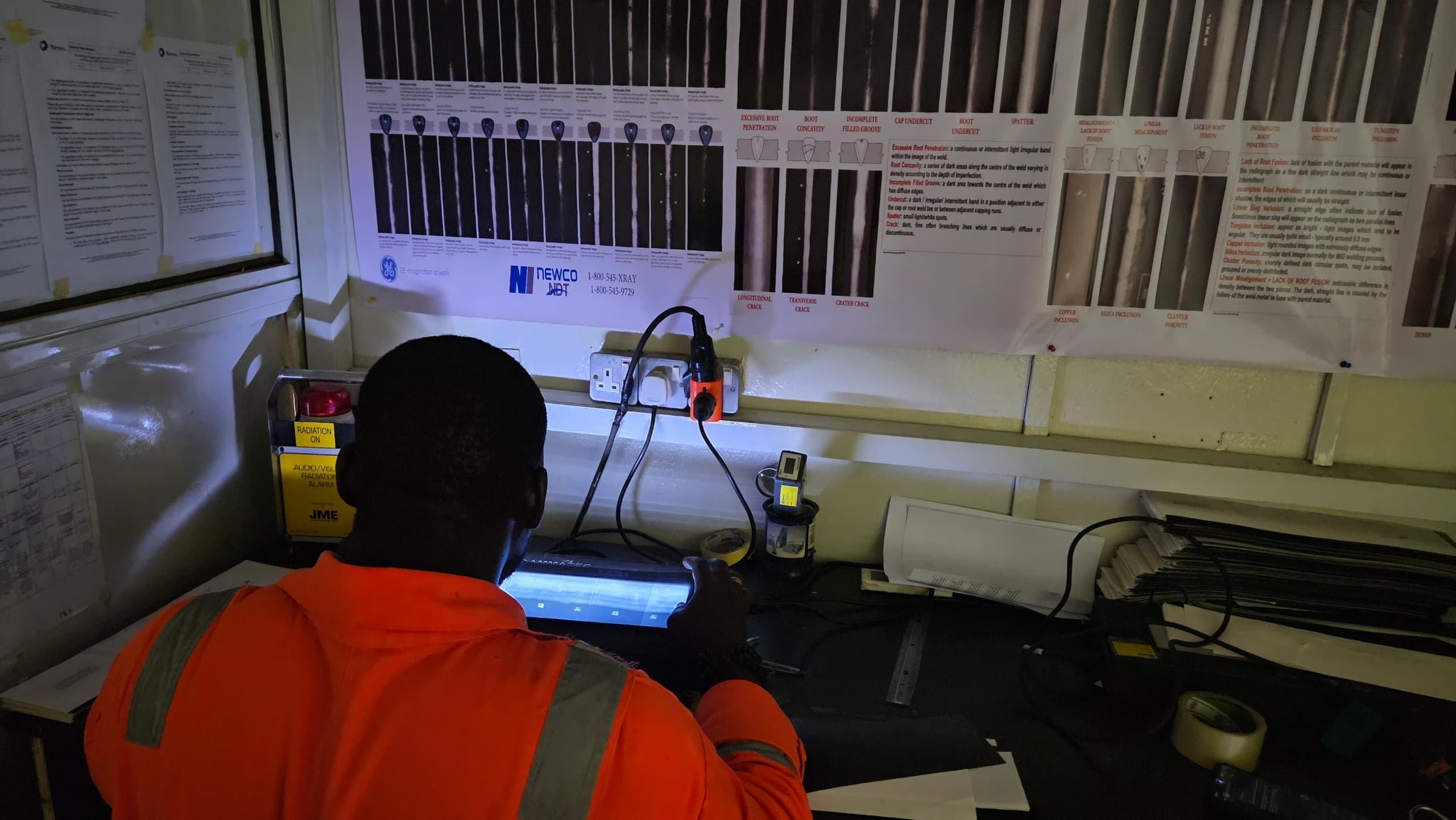
RADIOGRAPHIC FILM INTERPRETATION
Our ISO 9712 Certified RFI Technician inspecting one of several pipe to pipe welds of the 16"x11km Trans Ubeta/Obite Total Energies gas pipeline. This Particular Joint was analysed and found to be with Lack of Root Penetration Spanning over 150mm. As per API-1104, Joint was Rejected and a follow through on Repairs was carried out efficiently.
RADIOGRAPHIC FILM INTERPRETATION
Our ISO 9712 Certified RFI Technician inspecting one of several pipe to pipe welds of the 16"x11km Trans Ubeta/Obite Total Energies gas pipeline. This Particular Joint was analysed and found to be with Lack of Root Penetration Spanning over 150mm. As per API-1104, Joint was Rejected and a follow through on Repairs was carried out efficiently.
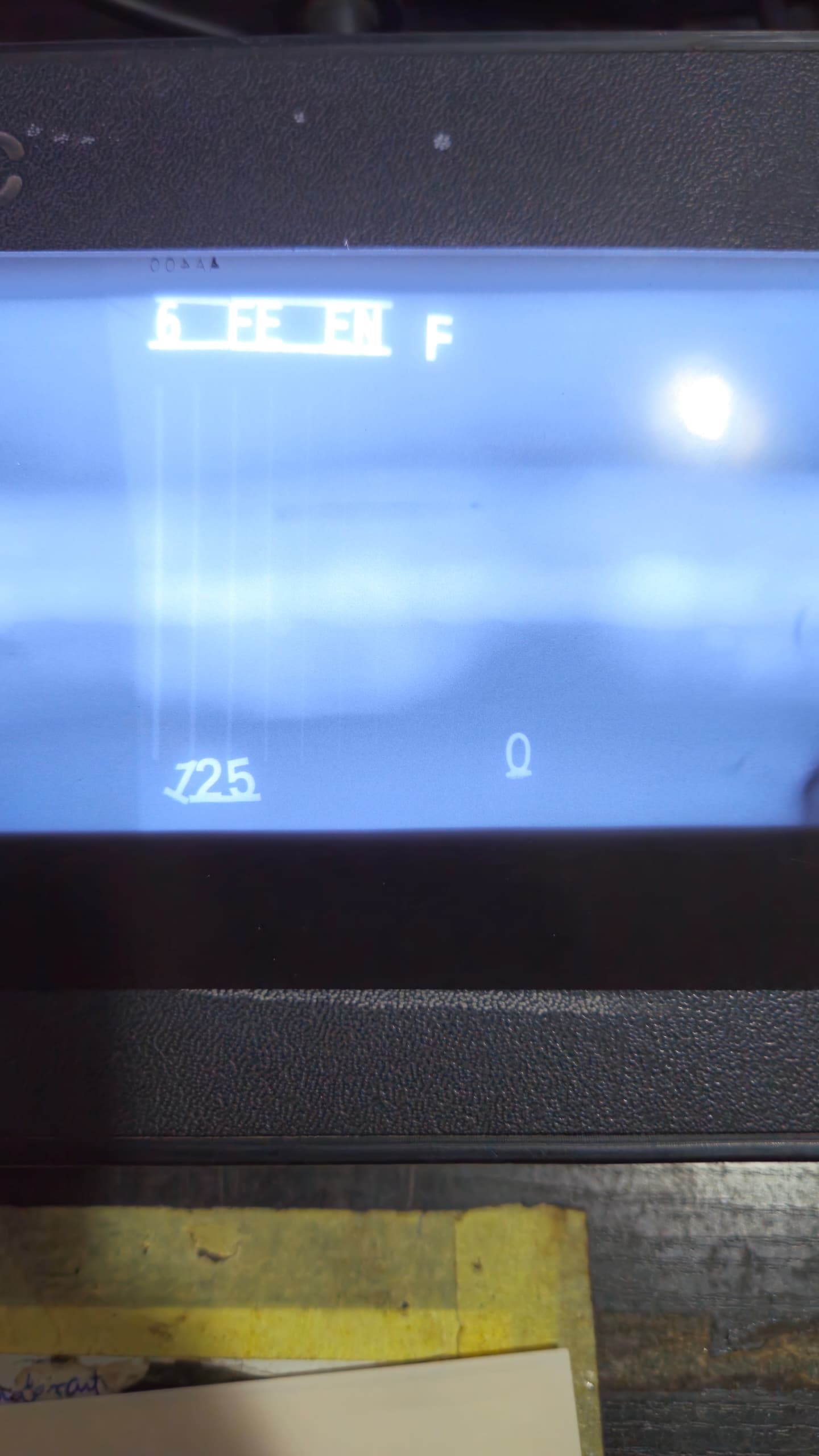
RADIOGRAPHIC FILM INTERPRETATION
Radiographic Testing/Radiographic Film Interpretation (RTFI) is a nondestructive examination (NDE) technique that involves the use of either x-rays or gamma rays to view the internal structure of a component. In the petrochemical industry, RT is often used to inspect machinery, such as pressure vessels and valves, to detect flaws. RT is also used to inspect weld repairs. Compared to other NDE techniques, radiography has several advantages. It is highly reproducible, can be used on a variety of materials, and the data gathered can be stored for later analysis (RFI). Radiography is an effective tool that requires very little surface preparation.
RADIOGRAPHIC FILM INTERPRETATION
Radiographic Testing/Radiographic Film Interpretation (RTFI) is a nondestructive examination (NDE) technique that involves the use of either x-rays or gamma rays to view the internal structure of a component. In the petrochemical industry, RT is often used to inspect machinery, such as pressure vessels and valves, to detect flaws. RT is also used to inspect weld repairs. Compared to other NDE techniques, radiography has several advantages. It is highly reproducible, can be used on a variety of materials, and the data gathered can be stored for later analysis (RFI). Radiography is an effective tool that requires very little surface preparation.
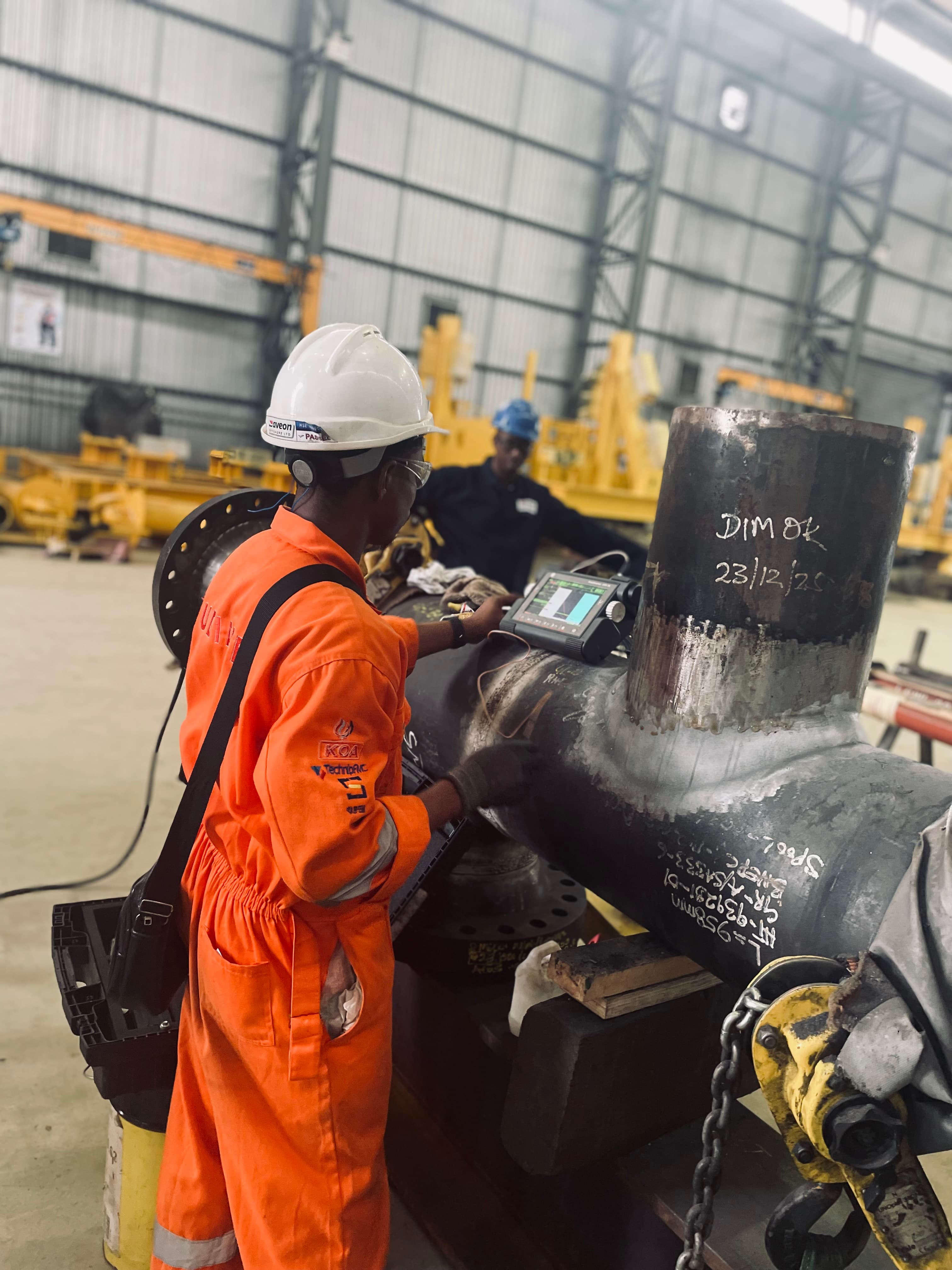
ULTRASONIC TESTING
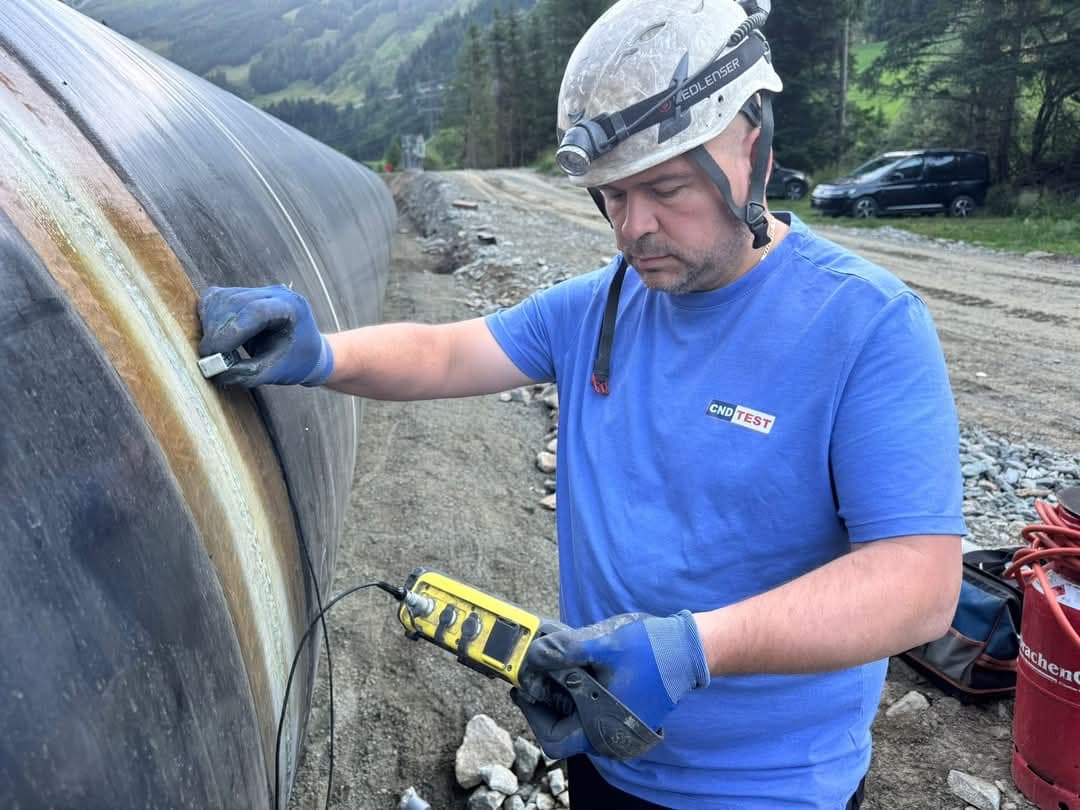
Flaw detection on a welded joint using both 60 deg and 70 deg on a 25mm pipe.. lam check using 0 deg compressional/longitudinal wave probe or can also be called a normal probe.. We IGIL are capable for any type of NDT inspection with experience and skilled personnel’s both ISO 9712/ASNT
ULTRASONIC TESTING
Flaw detection on a welded joint using both 60 deg and 70 deg on a 25mm pipe.. lam check using 0 deg compressional/longitudinal wave probe or can also be called a normal probe.. We IGIL are capable for any type of NDT inspection with experience and skilled personnel’s both ISO 9712/ASNT
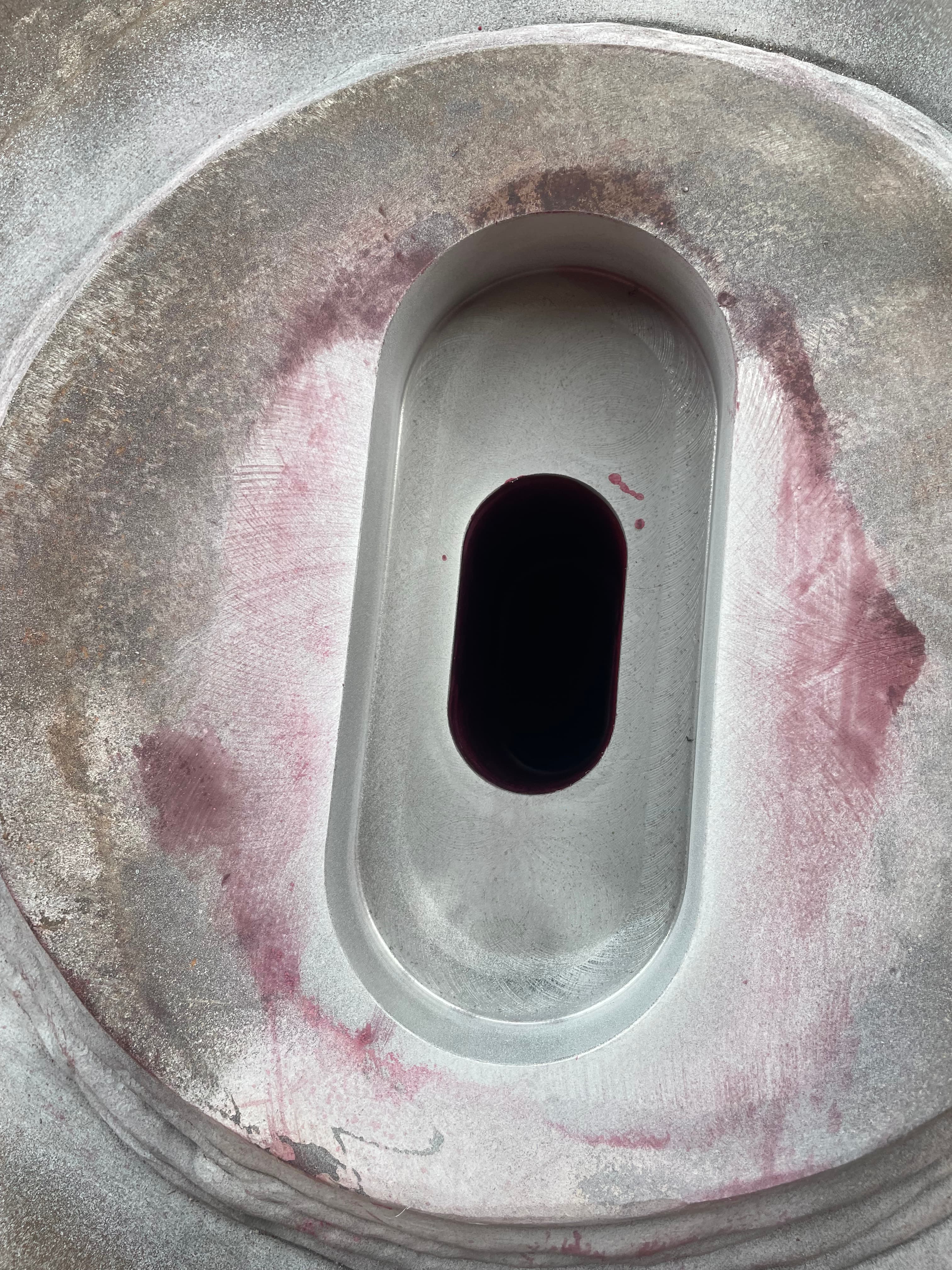
PENETRANT TESTING/ DYE PENETRANT INSPECTION (DPI)
Penetrant testing is an NDT method that work with the principle of capillary action for detection of surface breaking defects or flaws in all types of materials except from excessive porous material. Steps to PT 1. Pre-cleaning 2. Application of penetrant 3. Dwell time or contact time ( a crucial time it’s takes for the liquid penetrant to remain on the surface of the part) 4. Removal of the excess penetrant 5. Application of developer 6. Inspection 7. Post cleaning
PENETRANT TESTING/ DYE PENETRANT INSPECTION (DPI)
Penetrant testing is an NDT method that work with the principle of capillary action for detection of surface breaking defects or flaws in all types of materials except from excessive porous material. Steps to PT 1. Pre-cleaning 2. Application of penetrant 3. Dwell time or contact time ( a crucial time it’s takes for the liquid penetrant to remain on the surface of the part) 4. Removal of the excess penetrant 5. Application of developer 6. Inspection 7. Post cleaning
ULTRASONIC TESTING
The principle of ultrasonic testing is mismatch of acoustic impedance (Z) Ultrasonic testing is the use of ultrasound (sound with frequency above 20KHz) to detect flaws present inside the material.. Types of waveform 1. Compressional/longitudinal wave. It is Basically for thickness measurement ( corrosion and lamination check).. it is the use of zero degree probe or normal probe. It travels with a velocity of 5960m/s in steel material 2. Shear wave/Transverse wave: it is a wave whereby the propagation of sound is perpendicular to the vibration of particles. It travels at 3 different standards angels (45, 60, 70).. the sound travels at a velocity of 3200- 3250m/s 3. Surface / Rayleigh Wave 4. Plate/ Lamb Wave
ULTRASONIC TESTING
The principle of ultrasonic testing is mismatch of acoustic impedance (Z) Ultrasonic testing is the use of ultrasound (sound with frequency above 20KHz) to detect flaws present inside the material.. Types of waveform 1. Compressional/longitudinal wave. It is Basically for thickness measurement ( corrosion and lamination check).. it is the use of zero degree probe or normal probe. It travels with a velocity of 5960m/s in steel material 2. Shear wave/Transverse wave: it is a wave whereby the propagation of sound is perpendicular to the vibration of particles. It travels at 3 different standards angels (45, 60, 70).. the sound travels at a velocity of 3200- 3250m/s 3. Surface / Rayleigh Wave 4. Plate/ Lamb Wave
MAGNETIC PARTICLE INSPECTION
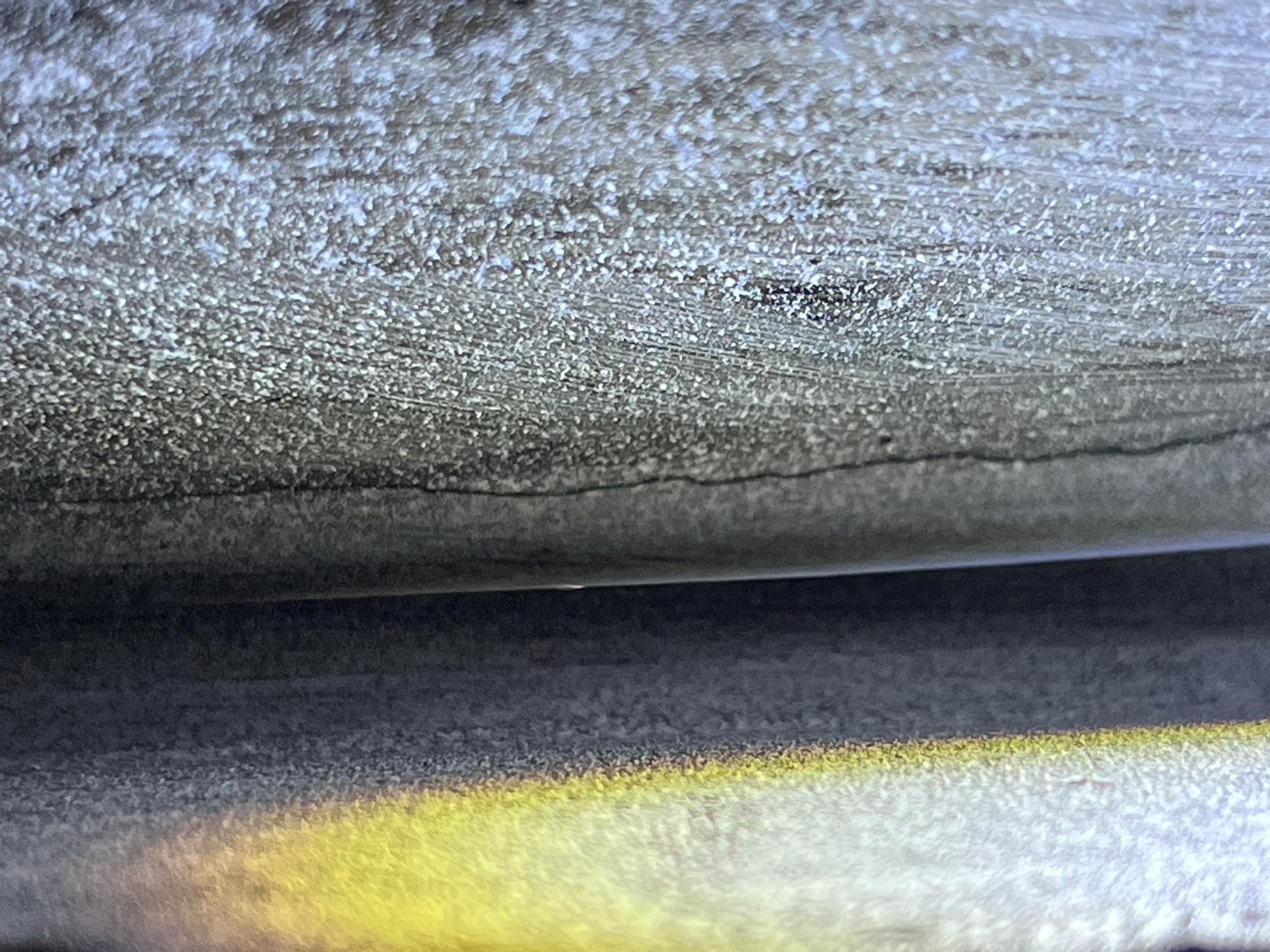
A longitudinal crack detected on weld. Steps to Magnetic Particle Inspection (MPI) 1. Pre cleaning 2. Application of white contrast paint 3. Magnetization of the part to create magnetic field. 4. Application of magnetic particle (black ink) 5. Inspection to observe any indications of flaws (e.g crack, lack of fusion) 6. Post cleaning Note: spraying of magnetic particle whilst the current is flowing, is called “Continuous Method” while spraying of particles after the current has been removed is called “Residual Method”. The most effective method here is the Continuous method..
MAGNETIC PARTICLE INSPECTION
A longitudinal crack detected on weld. Steps to Magnetic Particle Inspection (MPI) 1. Pre cleaning 2. Application of white contrast paint 3. Magnetization of the part to create magnetic field. 4. Application of magnetic particle (black ink) 5. Inspection to observe any indications of flaws (e.g crack, lack of fusion) 6. Post cleaning Note: spraying of magnetic particle whilst the current is flowing, is called “Continuous Method” while spraying of particles after the current has been removed is called “Residual Method”. The most effective method here is the Continuous method..
Critical inspection
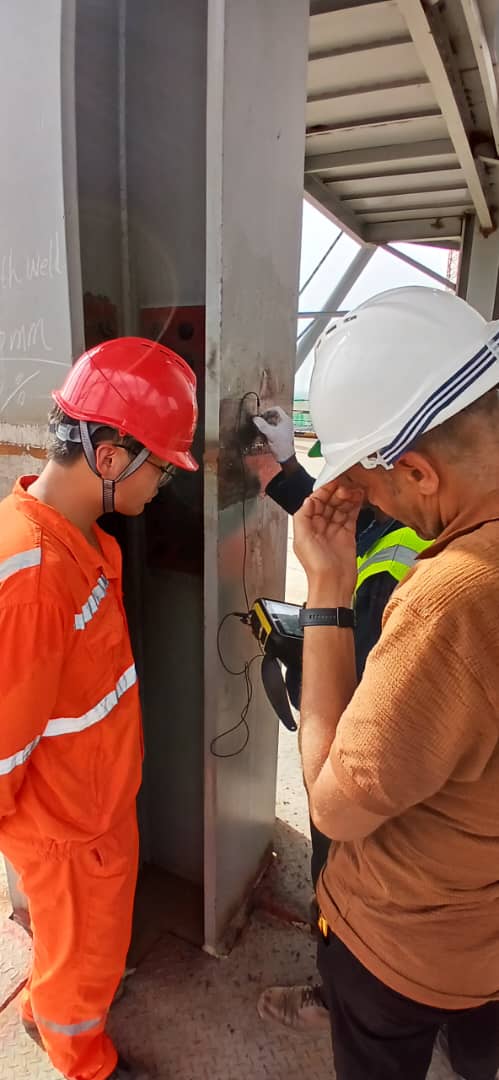
Ultrasonic flaw detection on column of a Preheater at Dangote Cement Factory at Ogun State
Critical inspection
Ultrasonic flaw detection on column of a Preheater at Dangote Cement Factory at Ogun State